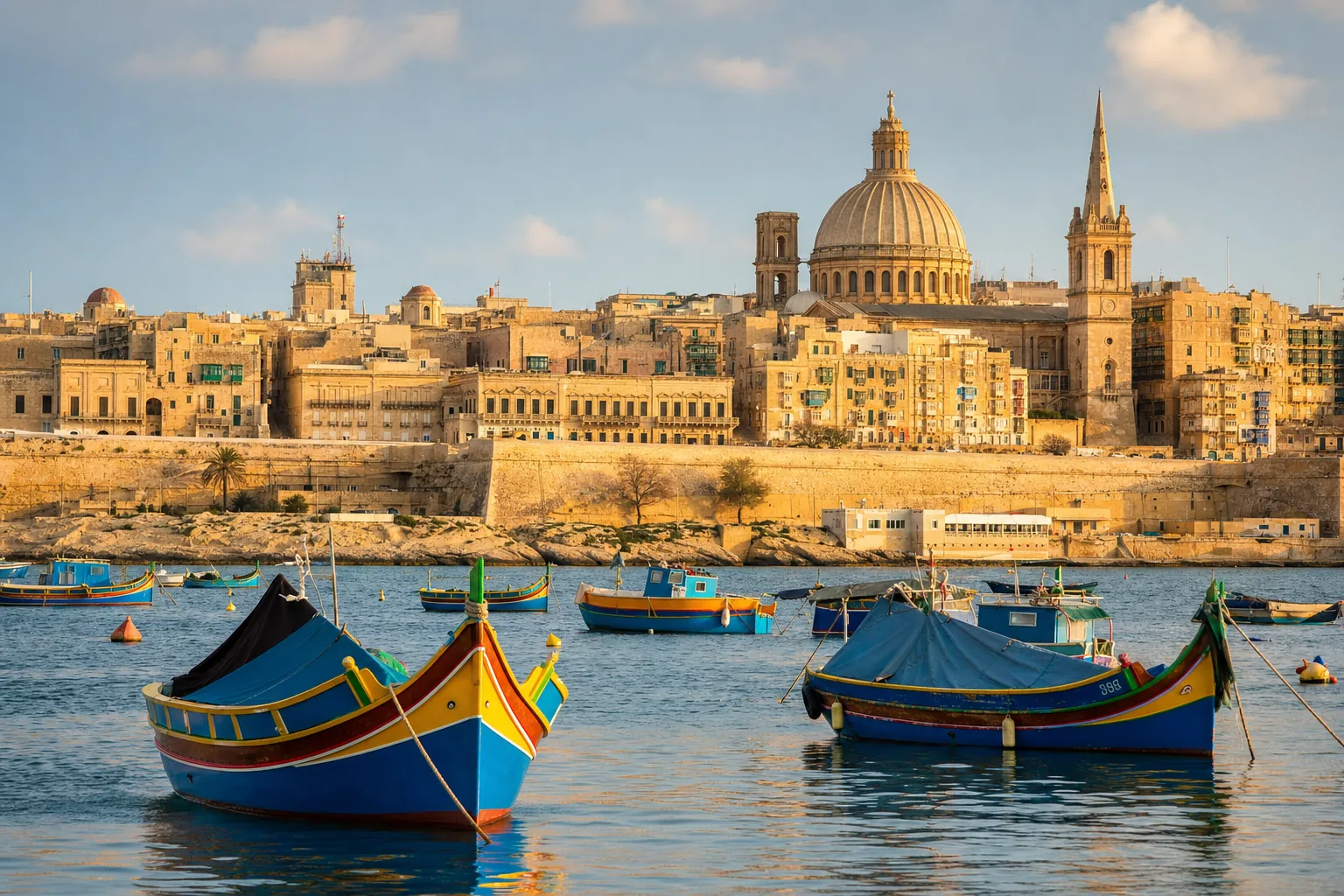
A fortified archipelago in the Mediterranean
Everything travellers usually ask before a trip to Malta. Can't find your answer? We're a message away.
Spring (March-May) and autumn (September-October) offer warm, comfortable weather and thinner crowds, making them ideal for sightseeing and swimming. Summer is hot and lively but busy and pricey, while winter is mild, quiet and good value.
Malta is part of the Schengen area, so many nationalities can enter visa-free for up to 90 days within any 180-day period. Travelers from visa-required countries need a Schengen visa, and a future ETIAS travel authorization is planned for currently visa-exempt visitors. Always check the latest rules for your nationality before booking.
Four to five days lets you cover Valletta, Mdina and the main historic sites at a relaxed pace. Adding a day or two for Gozo and Comino makes for a well-rounded week.
Malta is generally very safe with low levels of serious crime, and English is widely spoken, which makes getting help easy. As anywhere, use normal precautions against petty theft in busy tourist spots.
Bring light, breathable clothing and strong sun protection in summer, plus a layer for cool evenings in spring and autumn. Pack modest attire (covered shoulders and knees) for churches and comfortable shoes for walking historic cobbled streets.
Wandering the Baroque streets of Valletta and then taking a boat across to Comino's Blue Lagoon captures Malta's blend of history and sea. Standing inside a 5,000-year-old temple is another unforgettable highlight.
Sample rabbit stew (fenkata), the flaky pastizzi pastries, fresh seafood at Marsaxlokk and local Gozitan cheeses. Wash it down with Maltese wine or a Kinnie soft drink.
Yes; its compact size, English-speaking population and mix of historic venues, hotels and waterfront settings make it popular for group tours, incentives and small conferences. Short transfers mean itineraries stay efficient.
Our team is happy to help you plan every detail.