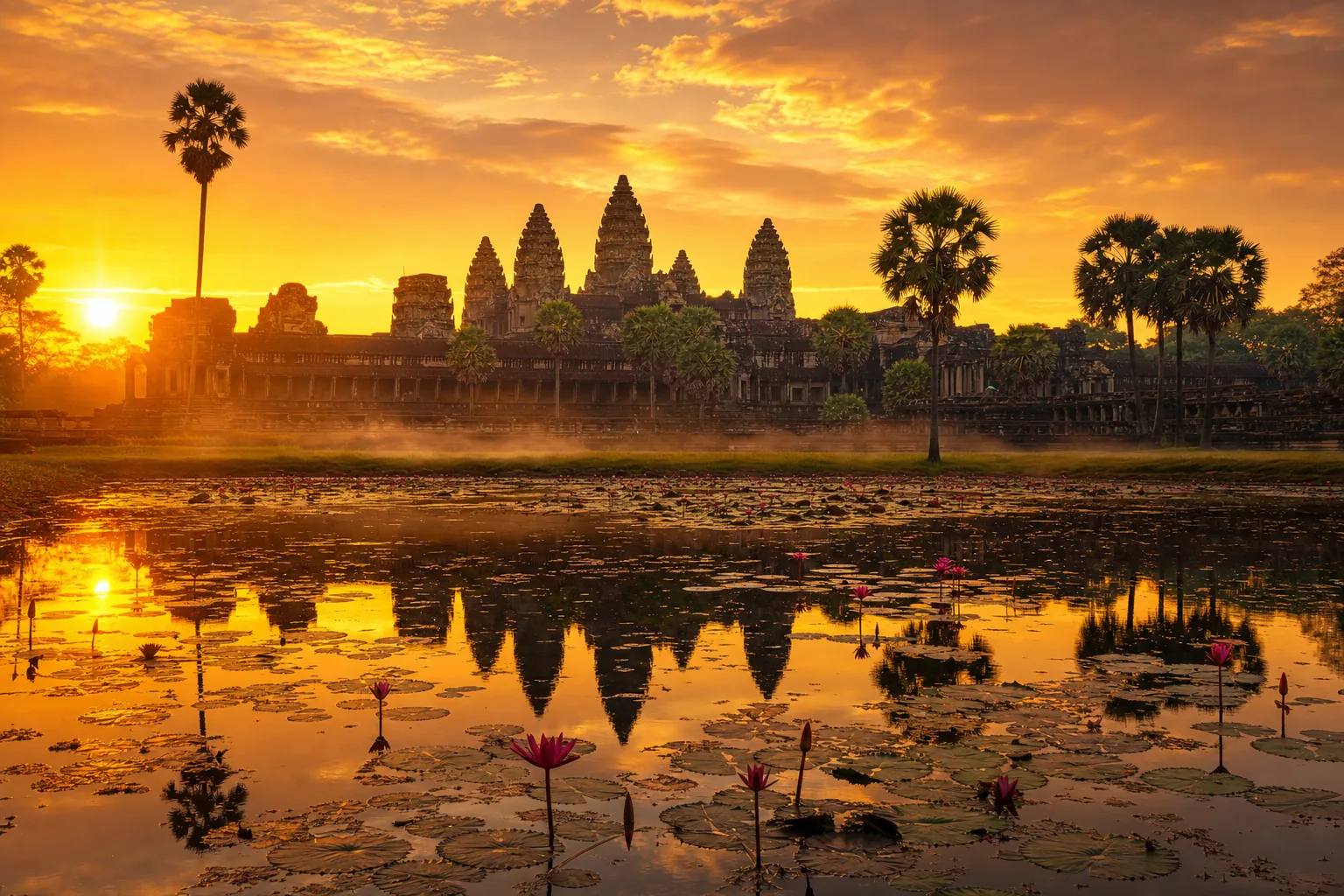
The temples of Angkor and beyond
Everything travellers usually ask before a trip to Cambodia. Can't find your answer? We're a message away.
The cool, dry season from November to February is the most comfortable and popular time, with pleasant temperatures for exploring Angkor. March to May is hot, and June to October is the green, quieter wet season with afternoon showers.
Many nationalities can obtain an e-visa online (single entry, 30-day stay) or a visa on arrival, while several ASEAN citizens enter visa-free. Apply through the official e-visa portal and check current fees and requirements for your nationality before you travel.
Three days at Angkor from Siem Reap covers the highlights, and adding Phnom Penh makes a rewarding five to seven days. Beach or island time in the south can extend the trip to around 10 days.
Cambodia is generally safe and welcoming for visitors. Use normal precautions against petty theft and traffic, and only visit rural areas via marked paths, as unexploded ordnance can remain in remote zones.
Bring light clothing, sun protection and plenty of water for the heat, plus rain gear in the wet season. Pack modest attire covering shoulders and knees for temples such as Angkor Wat.
Watching sunrise over Angkor Wat and then exploring the surrounding temples is the definitive Cambodia moment. A boat trip on the Tonle Sap to see floating villages is another highlight.
Try fish amok (a coconut curry steamed in banana leaf), lok lak stir-fried beef, and fresh Khmer noodle dishes. Street snacks and tropical fruit round out the experience.
Yes; Siem Reap has abundant hotels and guides geared to touring groups, and the compact geography keeps temple-focused itineraries efficient. Combining Angkor with Phnom Penh works well for cultural group programs.
Our team is happy to help you plan every detail.