Medjugorje pilgrimage, Ottoman bridges and turquoise falls
Everything travelers usually ask before a trip to Bosnia and Herzegovina. Can't find your answer? We're a message away.
Late spring (May–June) and early autumn (September–October) are the most comfortable windows, with warm days and thinner crowds. July and August are the hottest and busiest months, especially in Herzegovina, and are also the peak pilgrim season in Medjugorje. Winter is cold and snowy inland, good for skiing near Sarajevo but quiet at the southern sites.
Many nationalities, including UK, EU and US citizens, can enter visa-free for up to 90 days within any 6-month period for tourism or visiting family and friends. Your passport should be valid for at least 90 days beyond the date you plan to leave, and you should make sure it is stamped on entry and exit. Requirements vary by nationality, so our team confirms the right route for you when planning your trip.
A focused Medjugorje-and-Mostar visit works well over 3–4 days. Adding Sarajevo, Blagaj, Počitelj and the Kravice Waterfalls, 5–7 days lets you travel at a relaxed pace. Every Tourkom itinerary is a flexible starting point we tailor to your dates and interests.
The main tourism areas, including Sarajevo, Mostar, Medjugorje and the Herzegovina countryside, are well set up for visitors and generally safe. As anywhere, take normal precautions with valuables, and note that some rural areas away from marked roads can still carry landmine risk from the 1990s conflict, so stick to established paths and sites. We plan routes around current guidance and always recommend checking your government's latest travel advice before you go.
Medjugorje has been a major Catholic pilgrimage destination since 1981. Pilgrims gather at St James Church for Mass and confession, climb Apparition Hill (Podbrdo) and the steeper Cross Mountain (Križevac), and join evening prayer programmes. It pairs naturally with a visit to nearby Mostar, and our pilgrimage itineraries build in time for both reflection and sightseeing.
The local currency is the Convertible Mark (BAM, often written KM), which is pegged to the euro. Cards are widely accepted in cities, hotels and larger restaurants, but it is wise to carry some cash for smaller towns, markets, tips and rural sites. Euros are sometimes accepted informally, though you will usually get better value paying in Marks.
The country is best explored by road, and its Herzegovina highlights, Mostar, Medjugorje, Blagaj, Počitelj and the Kravice Waterfalls, cluster within easy drives of one another. Sarajevo has the main international airport, while Dubrovnik and Split in neighbouring Croatia are popular gateways for trips into Herzegovina. We arrange private transfers and guided transport so you can travel comfortably between sites.
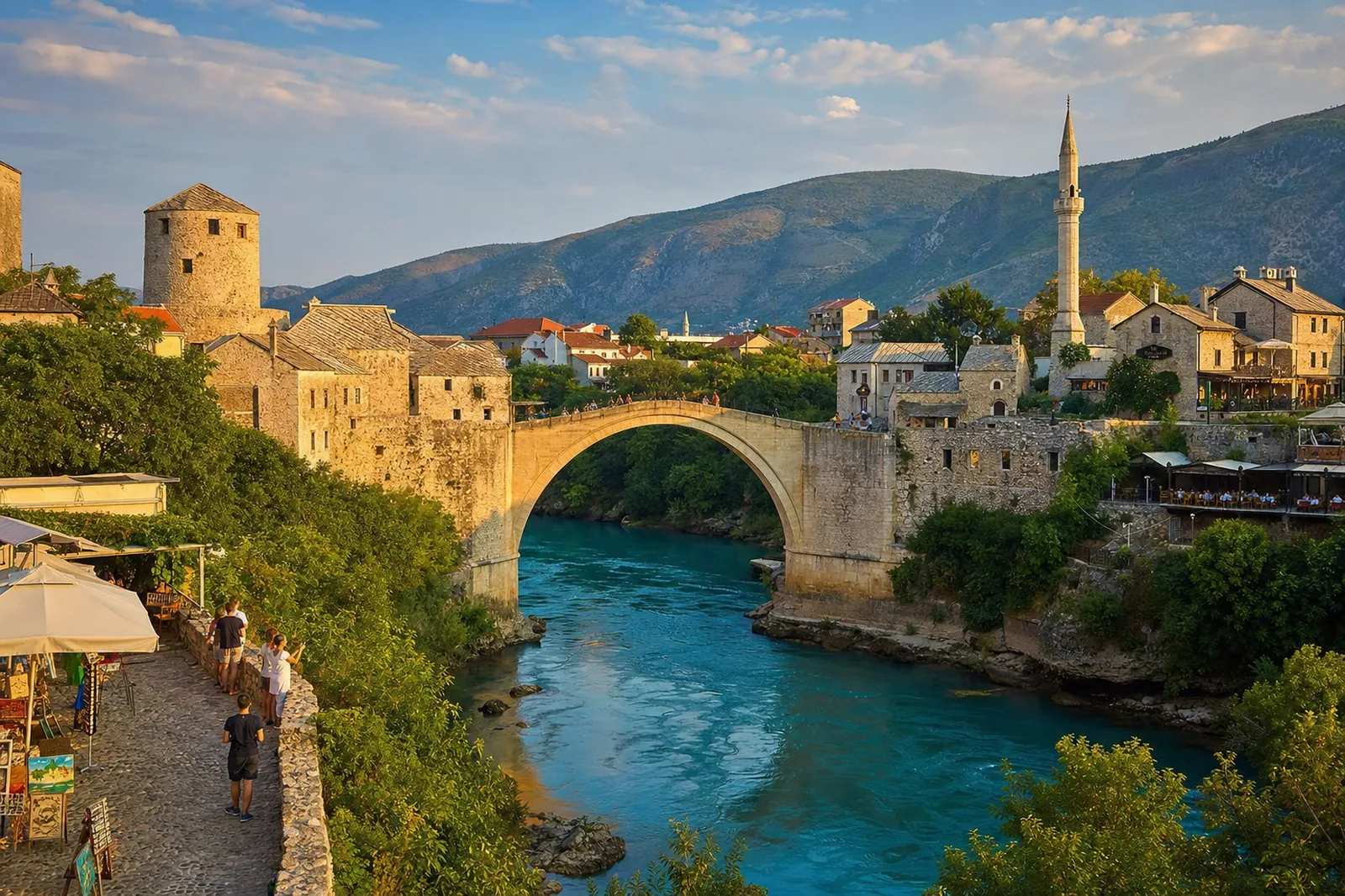
Yes. It is one of the easiest places to combine faith and culture, with Medjugorje's pilgrimage sites just a short drive from Mostar's UNESCO-listed Old Bridge, the Ottoman village of Počitelj, the Blagaj Dervish monastery and the Kravice Waterfalls. Our programmes are designed so pilgrims and travelers can experience both the spiritual heart of Medjugorje and the country's rich Ottoman and Austro-Hungarian heritage.
Our team is happy to help you plan every detail.